
Contrast Agents Used in CT and MRI Scans
Author - Larry A. Law

Contrast Agents Used in CT and MRI Scans
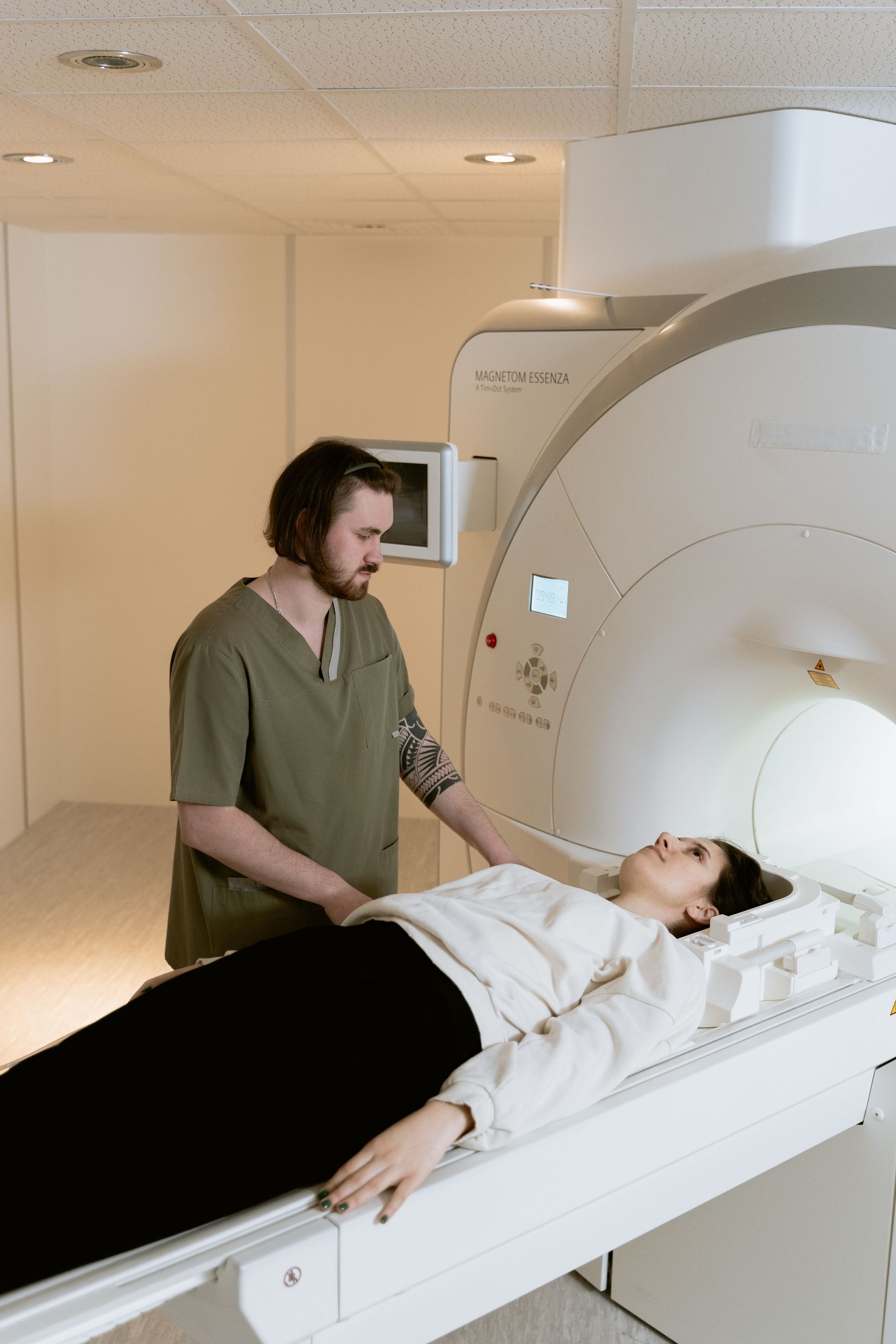
Every year, millions of people undergo CT and MRI scans with contrast agents. These are not simply dyes but drugs, each with its own risks, clearance timeline, and trade-offs. Yet most patients leave the imaging center knowing almost none of this. Lack of information about the drugs can make people wonder whether they need to “detox.” In most cases, the liver will clear the toxicity without any extra intervention necessary. Asking informed questions before the scan and knowing what to watch for afterwards is an important precaution for anyone undergoing these scans. The following information below comes from an exceptional article by Sheramy Tsai a medical researcher with The Epoch Times.
With CT Contrast, Risks Come Early
For most people with healthy kidneys, iodinated CT contrast is eliminated rapidly—nearly all of it leaves the body in urine within about 24 hours, according to the American College of Radiology. The main concern is not long-term retention, but whether the kidneys can handle the temporary load and whether an allergic reaction occurs.
Those at higher kidney risk include people with chronic kidney disease, diabetes-related kidney damage, dehydration, heart failure, advanced age, or several contrast scans in a short period, said Dr. Richard Semelka, a radiologist who has published extensively on MRI safety. Common nonsteroidal anti-inflammatory drugs such as ibuprofen and naproxen can add further strain to the kidneys.
Allergic-like reactions to modern iodinated contrast are uncommon—less than 1 percent of cases—with severe reactions occurring in roughly 0.04 percent, according to the American College of Radiology. The strongest predictor is a previous reaction, Semelka said. Patients should mention any history of hives, wheezing, throat tightness, or cardiovascular symptoms before the scan.
The injection itself can feel strange. Patients may notice warmth—often in the pelvis—along with a metallic taste or mild nausea, said Dr. Donald Frush, a pediatric radiologist at Duke University. These sensations can be startling, but they usually pass quickly.
MRI Contrast Is Complicated
MRI contrast is usually gadolinium-based. Most of it leaves through the kidneys, often within about a day. However, the Food and Drug Administration (FDA) has said trace amounts can remain in the brain, bones, and skin, even in people with normal kidney function.
That finding prompted the FDA to require class warnings and patient medication guides for all gadolinium-based MRI contrast agents. The agency said that gadolinium can remain in the body for months to years, but that it has not directly linked that retention to harm in patients with normal kidneys. It also said necessary contrast MRIs should not be avoided.
Still, the FDA advises doctors to consider which agent they use, especially for patients who may need many MRIs over a lifetime, pregnant women, children, and those with inflammatory conditions.
The American College of Radiology has stated that although retention occurs, harmful effects have not been proven (they have not been disproven either!). Most people feel fine. Some do not. They report symptoms such as burning pain, brain fog, muscle twitching, and bone aches, which may be temporary or long-lasting for some.
Gadolinium is not injected as a free metal. It is bound to a carrier molecule designed to help the body clear it. Newer, more stable contrast agents, such as Gadavist and Dotarem, bind the metal more tightly than older, less stable ones. Combined with improved kidney screening, this has made a once-feared complication in patients with severe kidney disease extremely rare.
Yet newer agents have not settled the broader debate. Some patients report persistent symptoms after gadolinium exposure, and experts still disagree about how often the contrast itself is the cause.
Gadolinium differs from many other heavy metals because of how it enters the body, Semelka said. Exposure to lead or mercury is often gradual, filtered through the lungs, gut, or skin. Gadolinium contrast is injected directly into the bloodstream, which he said may help explain why some patients describe sudden, body-wide symptoms after exposure. “You’ve bypassed all of your protections,” he said. “You’ve gone right into the core.”
Before the Scan
The best time to ask about contrast is when the scan is first ordered—ideally during the visit with the doctor requesting the imaging—not when you are already on the table, Frush said. “Asking at the time of the scan will often be met with, ‘I just do what was ordered,’” he said. “It is not the technologist’s role to decide whether contrast is appropriate.”
Before the scan, you can ask the ordering doctor:
- Was contrast planned?
- Is it iodinated (for CT) or gadolinium-based (for MRI)?
- What is the exact name and dose?
Common CT agents include iohexol (Omnipaque) and iopamidol (Isovue). Common MRI agents include gadobutrol (Gadavist) and gadoterate (Dotarem). Write down the name of the agent you received. It may matter for future scans or if you experience unexpected symptoms.
Contrast can reveal critical details that might otherwise be missed. However, a clearer image is not always a more useful one. The key question is not “Will it show more?” but “Will what it shows change what we do next?”
Contrast is easiest to justify when the result could change the next step: finding an abscess that needs drainage, bleeding that requires urgent treatment, or cancer that needs staging. But when the clinical plan would likely be the same either way, patients can reasonably ask whether a non-contrast scan, an ultrasound, or watchful waiting might be an option.
Radiologists sometimes adjust protocols after reviewing the case, including by switching between contrast and non-contrast exams, although the process varies by institution and state rules. Frush noted that the goal is not simply a prettier picture, but more useful information.
Semelka advised a direct question: “What might we miss without contrast, and would that change what we do?” Both halves matter. The first asks whether contrast adds information. The second asks whether that information changes care. Semelka said he is especially cautious with anyone who developed symptoms after a previous injection. His advice: “You had it, you reacted to it, don’t get it again.”
After the Scan
For most patients, no special detox is needed. The goal is to support the body’s natural clearance. Semelka advised a modest approach: Drink a little more water than usual, not gallons. Fluids support normal urine flow, the main route by which most contrast agents leave the body. A normal meal and gentle movement, if you feel well, are less about detoxing than helping the body recover without adding stress.
What is less helpful is responding with extremes: hard workouts, long sauna sessions, fasting, laxatives, alcohol, or a stack of new supplements. Those measures may sound like detox, but they can dehydrate the body or shift electrolytes, making people feel worse, Semelka said.
Patients with kidney concerns or heart failure should ask their doctor about fluid intake and temporarily avoiding nonsteroidal anti-inflammatory drugs. If you feel fine, stay calm, Semelka said. Panic often leads to aggressive detox measures that may do more harm than good.
What to Watch For
Most people feel normal after contrast. Mild, short-lived effects such as warmth, headache, or fatigue are common and usually resolve quickly. Seek immediate medical attention for difficulty breathing, throat swelling, chest pain, fainting, or sharply reduced urination.
Symptoms that show up later deserve more attention, especially after gadolinium. Semelka watches for what he calls the “big five”: brain fog, burning skin pain, muscle twitching, pins and needles sensations, and bone pain. The cluster matters, he said, because it may point to a broader reaction rather than a passing side effect. Some patients also report skin changes, tinnitus, unusual head pain, heart rhythm symptoms, or digestive problems.
If symptoms appear, write down the scan date, the contrast agent and dose, and when the symptoms began. Note whether they are improving or getting worse. Share that information with the doctor who ordered the scan and ask that it be added to your medical record.
What About Chelation?
Some patients with persistent symptoms turn to chelation, a treatment that uses a drug to bind certain metals so they can exit the body in urine. Semelka uses intravenous DTPA, a chelating drug, in carefully selected patients he believes have gadolinium deposition disease, a term for a pattern of symptoms after gadolinium exposure in patients with normal kidney function. However, chelation is not post-MRI, medically approved standard of care. The medical system views the supporting evidence for chelation as limited and debated and, of course, are loathe to feel that their approved treatments cause harm.
The American College of Radiology uses the neutral term “symptoms associated with gadolinium exposure,” or SAGE, to avoid assuming causation when it has not been scientifically verified. Semelka sees it differently. He said he believes that when symptoms begin after gadolinium and follow a recognizable pattern, the link is often clear enough to treat.
“You went in to get a test, you got something, and immediately afterward you reacted,” he said. “Do you think it’s another disease, or do you think it’s from the thing that you just got?”
The practical point is simple: It is not wise to chelate yourself. Chelation can deplete other essential minerals than the ones targeted. It requires experienced medical oversight. It is a medical treatment, not a cleanse. But is a valid procedure to rid the body of toxic metals harming your body.
The Best Protection Is Knowing What You Got
Contrast agents are medications, not simply dyes. The strongest protection is asking informed questions before the scan. The best support afterward is simple: modest hydration, normal food, gentle movement, and avoiding extremes. For those who react, details matter—know the agent, document the dose and date, record unusual symptoms, and make sure that the reaction is added to your medical record.
Recent Posts