

Infrared Light Therapy
Author - Larry A. Law
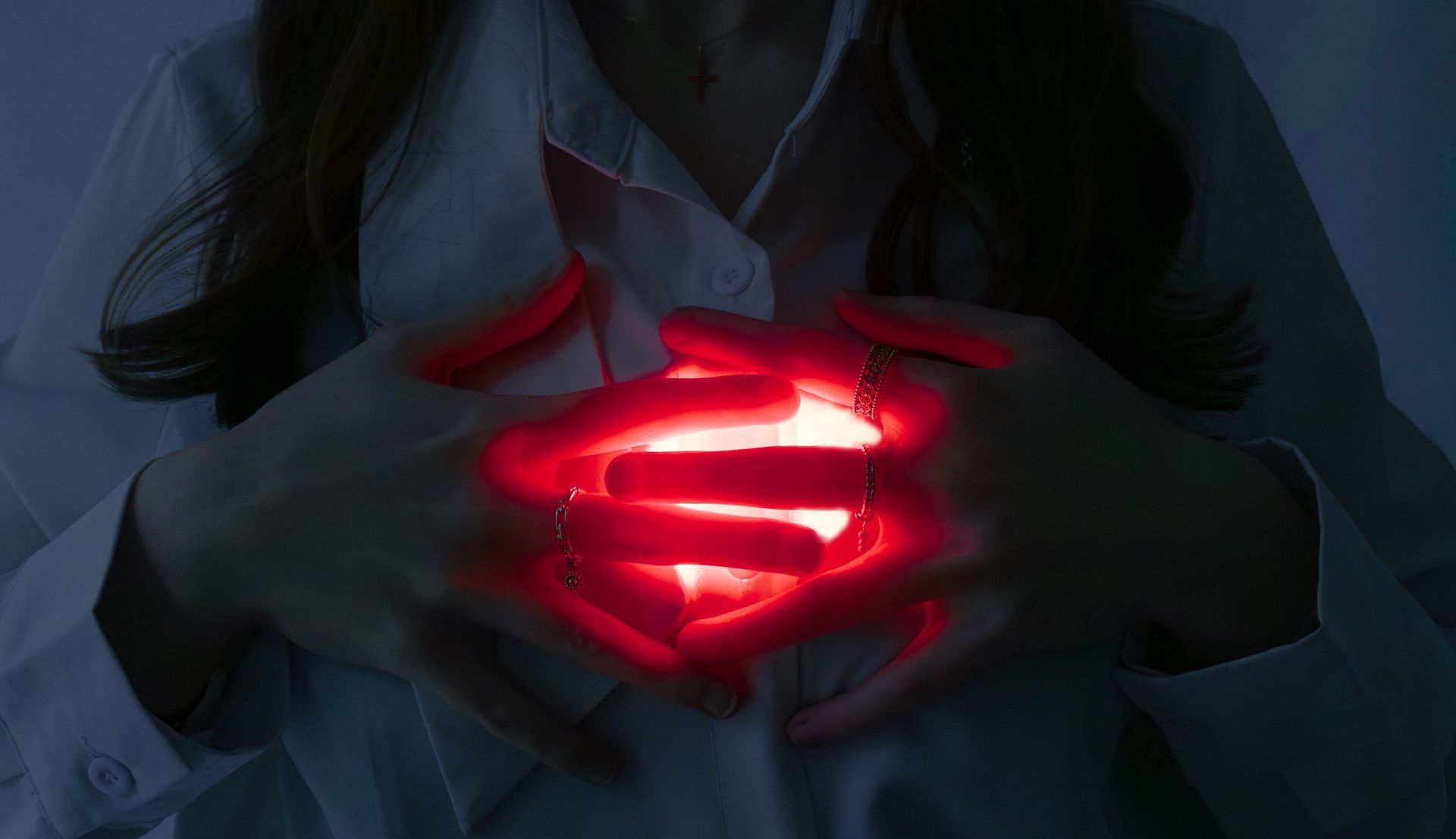
Light is a nutrient for the body and mind. That sounds funny; but nevertheless it is true. Our modern, indoor lives are lit up with artificial light that can cause us to become chronically depleted of the positive biological effects of natural light. A lack of sunlight leads to a serious deficiency of vitamin D3. This, in turn, can lead to many autoimmune and degenerative diseases. Unfortunately, many of us have been taught to fear the sun's ultraviolet (UV) radiation. People slather up with sunscreens that contain harmful carcinogenic ingredients to ward off the sun's light and don't realize they are doing great harm to themselves (see my book , pages 80-81). Healthier sunscreen alternatives do exist, but it's important to realize that direct UVB radiation from the sun is essential for the body to produce vitamin D3, and thus strengthen our immune systems.
Natural Versus Artificial Light
The sun radiates health-beneficial wavelengths of red and near-infrared light. Factory made, fluorescent lights are devoid of these helpful frequencies. In fact, they can be harmful as the color temperature, flicker rate and light quality can induce a stress response. Dr. Victoria Dunkley
warns in Psychology Today
that "the high color (colder/bluer) temperature of fluorescent light stimulates the non-visual pathways from the eye to various parts of the brain affecting biorhythms, stress hormones, emotions, arousal levels, and muscle tension."
How Red and Near-Infrared Light Help
People living in high latitudes, who struggle with depression related to
Seasonal Affective Disorder
(SAD), benefit immensely from red light therapy. The medical literature now refers to this therapy as photobiomodulation
(PBM). PubMed Central
currently shows over 10,000 results for this type of therapy. According to research published in the Aesthetic Surgery Journal
, PBM "enhances mitochondrial ATP production, cell signaling, growth factor synthesis, and attenuates oxidative stress." Mitochondria are the energy power stations for our cells and ATP is the electricity
they create to operate the cell. An enzyme in the mitochondria called cytochrome c oxidase
is stimulated by photons of near-infrared light. This causes the mitochondria to generate more ATP and release signaling molecules that engage genes to counteract cell degeneration by releasing antioxidants to repair damaged mitochondria. The antioxidants clean up free radicals which are chemically reactive molecules that try to bond and alter other molecules in destructive ways. These reactive agents lead to cancer and aging. The mitochondria controls, not only the life of the cell, but they also control the death of the cell. This is accomplished through the metabolic process of apoptosis or cell-programmed death. When the cell becomes damaged beyond its ability to repair itself, it initiates a termination sequence and self-destructs.
Light as a Treatment to Cure and Mitigate Disease
The Food and Drug Administration
(FDA) has approved red light therapy devices for the treatment of acne, muscle and joint pain, arthritis, compromised blood circulation, hair loss, and whole body pain. New studies are exploring the viability of red light therapy to reduce belly fat, increase bone density, and increase testosterone. In addition, this light therapy is being investigated for possible use in treating brain disorders like Alzheimer's and Parkinson's disease as well as certain cancers. An article in the American Institute of Mathematical Sciences (AIMS) Biophysics Journal
states that part of the reason this therapy is so effective is because of its "pronounced anti-inflammatory effects" with "both local and systemic mechanisms." The reduction of inflammation is "particularly important for disorders of the joints, traumatic injuries, lung disorders, and in the brain."
Tinnitus
There are currently no recommended treatments or approved drugs to treat tinnitus. Sedatives, antihistamines, antidepressants, local anesthetics, and antipsychotics are commonly prescribed, but they have many short- and long-term side effects without relieving the underlying cause. A first-of-its-kind study was published in the Journal of Personalized Medicine
that showed superior results to a placebo and with therapeutic effectiveness lasting longer than 15 days post-treatment. Over four weeks, researchers evaluated treatment for tinnitus in more than 100 men and women aged 18 to 65. The successful treatment involved low-level laser therapy
(LLLT). LLLT uses a narrow spectral width of light in the near-infrared spectrum to promote tissue regeneration, reduce inflammation, and relieve pain. This is the first study that shows treatment with LLLT to the middle ear and cochlear area is superior to placebos. It is also the first to investigate the effects of LLLT combined with other therapies. It represents real hope for the future for those suffering with tinnitus.
Recent Posts